


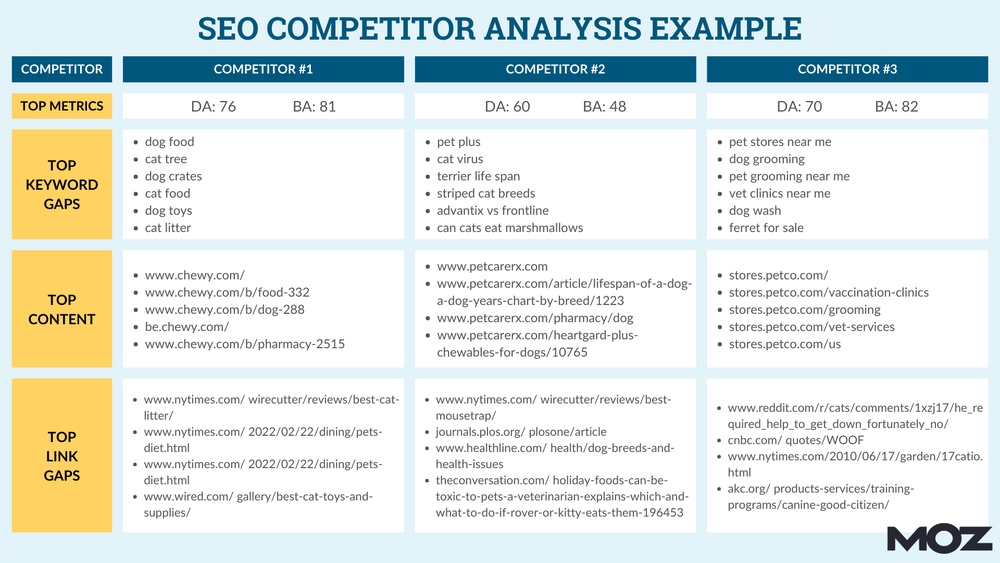
If you want your website to stand out and attract more visitors, understanding what your competitors are doing is key. SEO competitor analysis gives you a clear view of their strengths and weaknesses.
By knowing this, you can improve your own strategy and get ahead. This article will show you how to uncover valuable insights about your competitors that can boost your rankings and grow your traffic. Ready to see what your competition is up to and turn that knowledge into success?
Keep reading to find out how.
Importance Of Competitor Analysis
Competitor analysis is a key part of any SEO strategy. It helps you learn what others in your market do well. This knowledge guides your own SEO efforts. Understanding competitors’ strengths and weaknesses can save time and effort. It also helps you avoid common mistakes and spot new opportunities. Without competitor analysis, your SEO plan might miss important factors that affect your ranking and traffic.
Boosting Seo Performance
Competitor analysis shows which SEO tactics bring success. You can see which keywords competitors target. This insight helps you choose better keywords for your site. Learning from competitors’ content structure and backlink sources improves your own SEO. It helps increase your website’s visibility in search results. Small changes based on competitor data can lead to big gains in traffic.
Identifying Market Gaps
Studying competitors reveals areas they do not cover well. These gaps are chances to offer unique content or services. Filling these gaps attracts users who cannot find what they want elsewhere. It also reduces direct competition for those topics. Market gaps help you create value that stands out. This can lead to more visitors and better engagement on your site.
Staying Ahead In Rankings
SEO is always changing. Competitors improve their websites and strategies. Keeping track of their moves helps you adjust your approach. Early changes can prevent losing ranking positions. Watching competitors also helps you spot new trends first. Staying ahead means your site remains relevant and visible. This continuous effort keeps your SEO competitive over time.
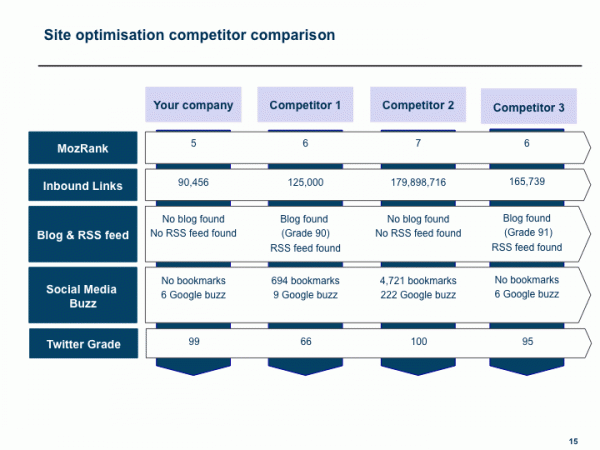
Credit: www.smartinsights.com
Choosing The Right Competitors
Choosing the right competitors is key for effective SEO analysis. It helps focus your efforts on the most relevant players in your market. Picking the wrong competitors wastes time and resources. This section explains how to identify the best competitors to study for SEO success.
Direct Vs Indirect Competitors
Direct competitors sell the same products or services as you. They target the same customers and solve the same problems. Indirect competitors offer different products but attract a similar audience. Both types matter for SEO, but direct competitors usually provide clearer insights. Indirect competitors can show new trends and opportunities.
Analyzing Top Performers
Top performers rank well for the keywords you want to target. They have strong websites and good user engagement. Study their content, site structure, and backlink profile. Look at what makes them stand out. This helps you find gaps in your own strategy. Focus on competitors that consistently appear in search results for your niche.
Using Tools For Competitor Selection
SEO tools can identify competitors based on keywords and traffic. Use tools like SEMrush, Ahrefs, or Moz for accurate data. These tools show your competitor’s organic keywords and backlinks. They also reveal competitors you might miss manually. Use this data to choose relevant competitors for your analysis.
Keyword Strategy Insights
Keyword strategy insights help you understand how competitors attract visitors. Analyzing their keywords shows what works in your niche. This knowledge helps shape your own SEO plan with better focus.
By studying competitors’ keywords, you can find new opportunities. You learn which words bring traffic and which ones miss the mark. This process saves time and guides your content creation.
Finding Competitors’ Top Keywords
Start by listing your main competitors in search results. Use SEO tools to see their highest-ranking keywords. These keywords bring them the most visitors.
Focus on keywords with high search volume and reasonable competition. These are valuable targets for your own site. Track how competitors use these keywords in titles and content.
Spotting Keyword Gaps
Keyword gaps are words your competitors rank for but you do not. Find these gaps by comparing keyword lists side by side. They show missing content or topics on your site.
Fill these gaps with relevant, quality content. This helps capture extra traffic and outrank competitors. It also diversifies your keyword profile for better reach.
Leveraging Long-tail Opportunities
Long-tail keywords are longer, specific phrases with lower competition. Competitors may overlook these valuable terms. Find long-tail keywords related to your main topics.
Create content around these phrases to attract targeted visitors. These users often have clear intent and are easier to convert. Long-tail keywords build steady, lasting traffic over time.

Credit: www.scalenut.com
Backlink Profile Analysis
Backlink profile analysis is a key part of SEO competitor analysis. It helps you see which websites link to your competitors. These links affect their search rankings and authority. Understanding their backlink profile gives clues about their SEO strategy. It also shows chances to improve your own link building.
Evaluating Link Quality
Not all backlinks hold the same value. Links from trusted, high-authority sites matter most. Low-quality links can harm your ranking. Check the domain authority of linking sites. Look for relevance to your niche. Avoid spammy or unrelated links. Quality links boost your site’s trust and visibility.
Identifying Link Building Tactics
Analyze how competitors gain their backlinks. Are they using guest posts, directories, or forums? Notice patterns in their link sources. This reveals their link building methods. Spotting these tactics helps you find effective ways to build links. It also alerts you to avoid risky strategies.
Discovering New Linking Opportunities
Backlink analysis uncovers sites that link to your competitors but not you. These sites are potential link partners. Reach out to them with valuable content or offers. Find industry blogs, news sites, or resource pages. New links can improve your site authority and traffic.
Content Strategy Secrets
Content strategy is key to beating your SEO competitors. Understanding what works for others helps shape your own plan. Study their content closely. Notice what types and styles attract attention. This gives clues about your audience’s preferences.
Successful content is not random. It follows patterns that boost engagement. Spotting these patterns can guide your efforts. Copying good ideas is smart, but adapting them to fit your voice is better. This way, you build trust and keep your content fresh.
Analyzing Content Types And Formats
Check what formats your competitors use most. Blog posts, videos, infographics, or podcasts? See which types get the most views and shares. Some topics work better as videos, others as written guides. Matching the right format to the topic helps hold readers’ attention.
Look at the length too. Short posts may suit quick tips. Longer articles might explain complex ideas well. Understand these choices. Use similar formats for your content to meet audience needs.
Spotting Engagement Patterns
Engagement means likes, comments, and shares. Notice which content gets the most. Are questions in the post driving comments? Do visuals increase shares? Spot these trends. They show what your audience enjoys.
Check posting times and frequency. Some competitors post daily, others weekly. Find out if frequent posts get more interaction. Use this data to plan your schedule.
Replicating Successful Content Ideas
Identify top-performing content themes. Are competitors focusing on how-to guides or product reviews? Try creating similar topics with your own twist. Use fresh examples or updated facts. This keeps your content useful and original.
Don’t copy word for word. Instead, learn from what works. Improve on ideas by adding your unique view. This builds authority and keeps readers coming back.
Technical Seo Checks
Technical SEO checks reveal how well a site runs behind the scenes. These checks help find issues that affect rankings and user experience. Understanding these factors is key to beating competitors in search results.
Focus on site speed, mobile use, and how search engines crawl and index pages. These areas can make a big difference in SEO success.
Site Speed And Performance
Fast sites keep visitors happy and reduce bounce rates. Check competitor site load times using tools like PageSpeed Insights. Look for slow images, scripts, or servers. Improving speed boosts user experience and search rankings.
Mobile Optimization Tactics
Most users browse on phones. Competitors with mobile-friendly sites gain an edge. Analyze their responsive design and loading speed on mobile. Use simple layouts and readable fonts. Mobile optimization helps reach more users and improves SEO.
Crawlability And Indexing Factors
Search engines must crawl and index pages to rank them. Study competitor robots.txt files and XML sitemaps. Check for broken links or duplicate content. Fixing crawl errors helps search engines find your pages faster and rank them higher.
Tracking And Measuring Competitor Moves
Tracking and measuring competitor moves is key to strong SEO. It helps spot changes fast. You can see what works for them and what doesn’t. This insight guides your next steps. Staying updated keeps you ahead in the search results.
Setting Up Alerts And Monitoring Tools
Use alerts to get instant updates about competitors. Tools like Google Alerts or SEMrush track keywords and backlinks. They send notifications for new content or ranking changes. Monitor social media for trends and customer reactions. Alerts save time and keep you informed constantly.
Interpreting Changes In Rankings
Watch ranking shifts closely. A sudden rise may mean a new strategy or content update. Drops can show lost links or penalties. Compare their changes with your own. Understanding why rankings move helps predict their next move. Look for patterns over time for clear insights.
Adjusting Strategies Based On Data
Use data to tweak your SEO plans. If competitors succeed with certain keywords, consider targeting similar ones. Improve your content where they perform better. Fix technical SEO issues they exploit. Always test changes and measure results. Adapting fast keeps your site competitive and relevant.
Turning Insights Into Action
Turning insights from SEO competitor analysis into action is vital for growth. Data alone won’t improve your site. You must use those findings to make smart changes. Focus on steps that bring the most benefit. Small, clear actions lead to better rankings and more visitors.
Prioritizing Seo Improvements
Start with the easiest fixes that impact your site most. Look for keywords your competitors rank for but you do not. Improve your content with those keywords. Fix technical issues like slow pages or broken links. Prioritize tasks that increase traffic or user experience quickly. This method saves time and boosts results faster.
Crafting Unique Value Propositions
Stand out by offering something your competitors lack. Use insights to find gaps in their content or services. Create content that answers questions they miss. Highlight your strengths clearly on your site. Unique offers help attract and keep visitors. This builds trust and encourages users to choose you.
Continuous Competitor Review
SEO is not a one-time effort. Competitors change strategies regularly. Check their sites often to spot new trends or tactics. Update your plan based on fresh data. Staying aware helps you adapt and stay ahead. Regular reviews keep your SEO strong and relevant.
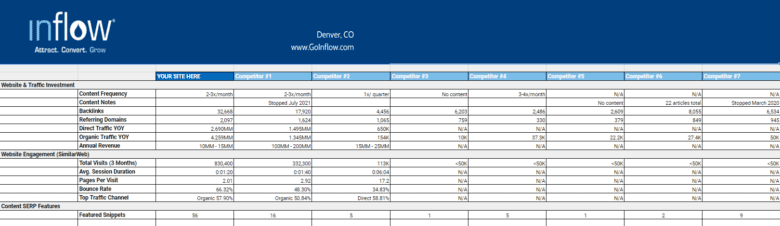
Credit: www.goinflow.com
Frequently Asked Questions
What Is Seo Competitor Analysis?
SEO competitor analysis identifies and evaluates your competitors’ online strategies. It helps improve your website’s ranking and traffic by learning from their strengths and weaknesses.
How To Identify Seo Competitors Effectively?
Identify SEO competitors by searching your target keywords. Analyze websites ranking on the first page. Use tools like SEMrush or Ahrefs to spot direct and indirect competitors.
Which Tools Are Best For Seo Competitor Analysis?
Popular tools include SEMrush, Ahrefs, Moz, and SpyFu. These tools provide data on keywords, backlinks, traffic, and content strategies of competitors.
Why Is Backlink Analysis Important In Competitor Research?
Backlinks influence search rankings significantly. Analyzing competitor backlinks reveals link-building opportunities and helps improve your website’s authority and visibility.
Conclusion
SEO competitor analysis helps you understand your market better. It shows what your rivals do well and where they lack. Use this knowledge to improve your own website and content. Keep checking your competitors often to stay updated. Small changes can bring steady growth over time.
Focus on clear goals and track your progress. This way, you build a stronger online presence step by step. Remember, success comes from learning and adapting, not shortcuts. Stay patient and keep working smart.