Are you struggling to make your content stand out? You’re not alone.
With so much information online, catching and keeping your audience’s attention can feel impossible. But what if you could create content that not only attracts visitors but also turns them into loyal fans? This article is packed with simple, effective content marketing tips designed to help you do just that.
Keep reading, and you’ll discover how small changes can bring big results for your business.
Content Planning
Content planning is the first step to a strong content marketing strategy. It helps organize ideas and ensures your content meets audience needs. Good planning saves time and keeps your efforts focused. It also helps keep your posts consistent and relevant. The key parts of content planning include understanding your audience, choosing the right topics, and scheduling your posts.
Audience Research
Knowing your audience is crucial. Research who they are and what they like. Find out their problems and questions. Use surveys, social media, and comments to gather insights. This helps create content that truly interests them. Content that solves their problems builds trust and keeps them coming back.
Topic Selection
Choose topics that match your audience’s needs and interests. Focus on subjects that provide value. Use keyword research to find popular search terms. This helps your content get found in search engines. Pick topics that fit your business goals too. Quality topics make your content useful and shareable.
Content Calendar
Plan your content schedule with a calendar. Decide how often to post and stick to it. A calendar keeps your ideas organized and timely. It helps avoid last-minute stress and missed deadlines. Include important dates, events, and holidays in your plan. Consistent posting builds audience trust and grows your reach.
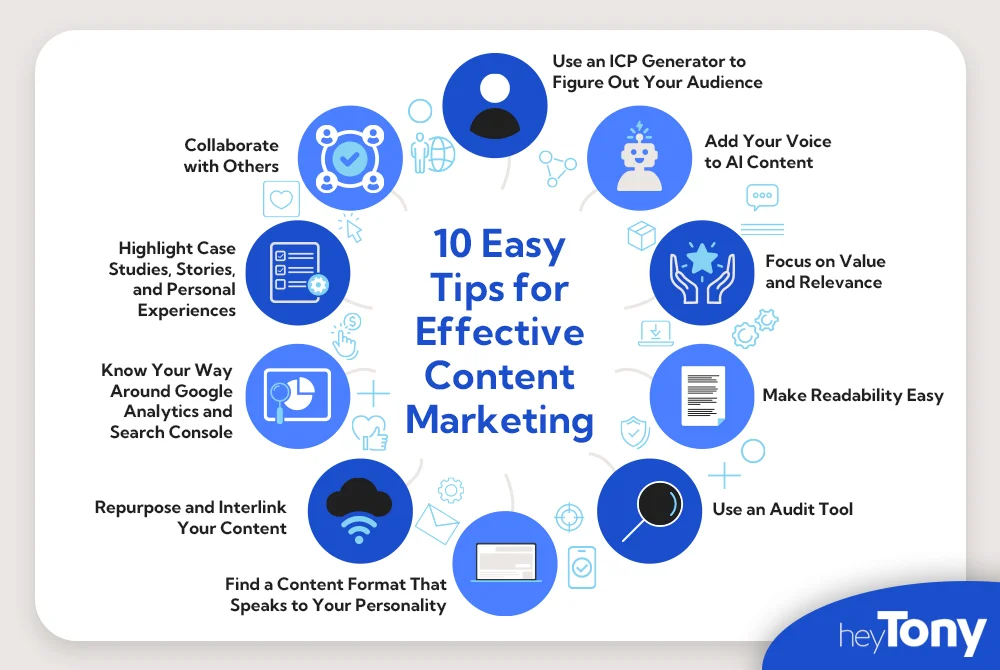
Credit: heytony.ca
Content Creation
Creating great content is the heart of content marketing. It helps attract readers and keeps them interested. Good content speaks directly to the audience. It solves problems or answers questions. Each piece should have a clear purpose and a strong message.
Focus on making content easy to read and enjoyable. Use simple words and short sentences. Break up the text with headings and visuals. This makes it easier for readers to follow and understand.
Crafting Engaging Headlines
Headlines are the first thing readers see. They decide if someone will read the rest or move on. Use clear and interesting words. Make the headline promise a benefit or solution. Keep it short but powerful. Avoid vague or boring titles that don’t catch attention.
Writing Compelling Copy
Good copy keeps readers hooked. Write in a friendly, natural tone. Speak directly to the reader using “you.” Explain ideas clearly and simply. Use short paragraphs and bullet points to make reading easier. Ask questions to involve readers and make them think.
Using Visual Elements
Images and videos make content more attractive. They help explain ideas faster than words alone. Use relevant pictures that support your message. Charts and infographics show data clearly. Keep visuals clean and easy to understand. This breaks up text and keeps readers engaged.
Seo Techniques
SEO techniques help your content reach more people online. They improve your website’s visibility on search engines. Using SEO correctly can bring steady, free traffic to your site. Focus on key areas like keywords, page structure, and links. These elements work together to boost your rankings and attract visitors.
Keyword Optimization
Choose keywords that match what your audience types in search. Use tools to find popular and relevant words. Place keywords naturally in titles, headers, and content. Avoid stuffing keywords; it makes reading hard and harms SEO. Think about user intent and create content that answers their questions.
On-page Seo Best Practices
Write clear and descriptive meta titles and descriptions. Use header tags to organize content and guide readers. Add alt text to images to help search engines understand them. Make sure your site loads fast and works well on phones. Use simple URLs that include important keywords.
Link Building Strategies
Build links from trusted and related websites to improve authority. Create valuable content that others want to share and link to. Use guest blogging to reach new audiences and earn backlinks. Avoid spammy links; they can lower your rankings. Focus on quality links that bring real visitors to your site.
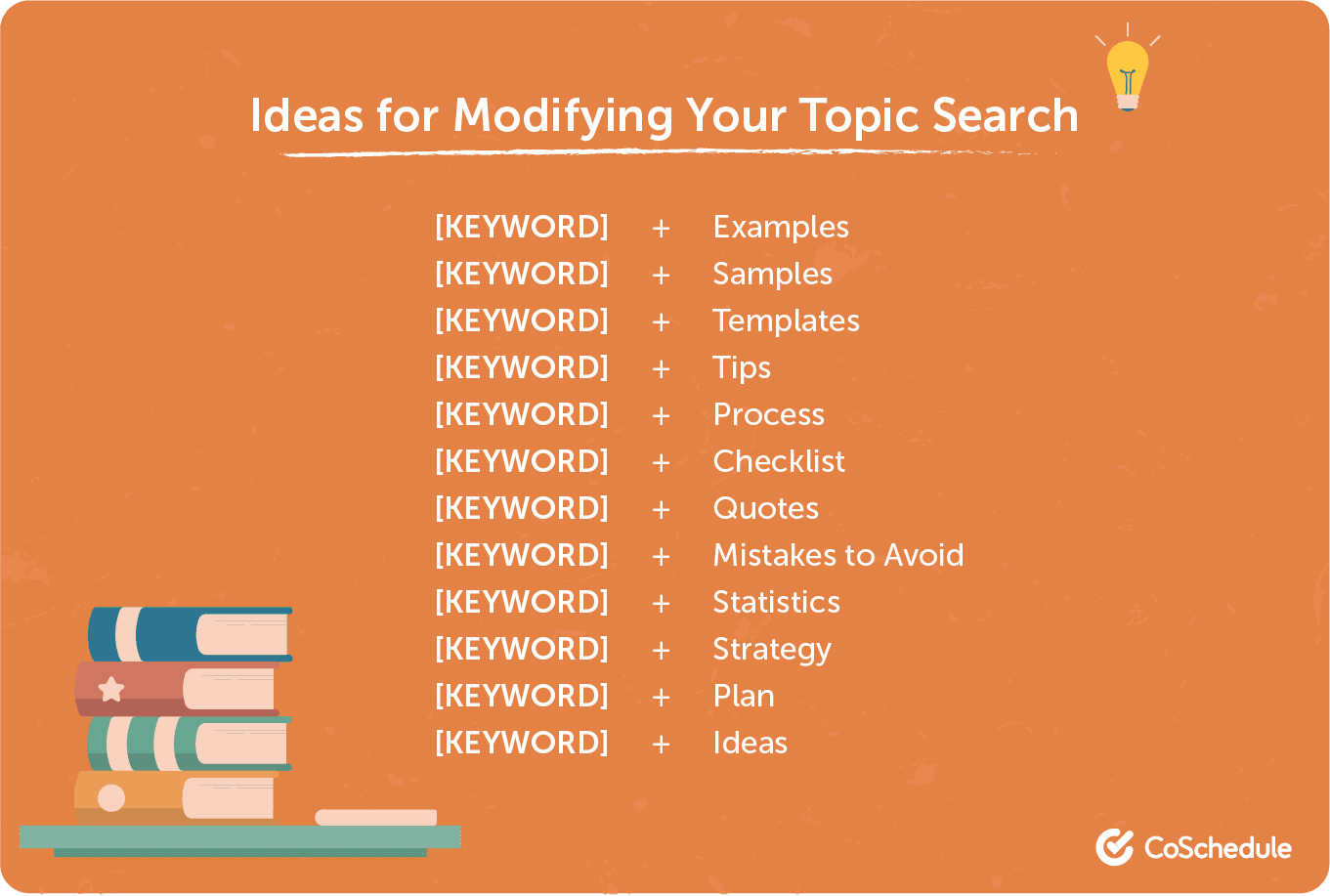
Credit: coschedule.com
Distribution Channels
Choosing the right distribution channels is key to content marketing success. These channels help your content reach the right audience. Using multiple channels increases your content’s visibility. Each channel has unique strengths that suit different content types. Understanding these channels lets you share your message effectively.
Social Media Sharing
Social media platforms connect you to millions of users instantly. Share your content on sites like Facebook, Twitter, and LinkedIn. Use short, clear captions to catch attention quickly. Engage with comments to build relationships and trust. Post regularly to keep your audience interested and informed.
Email Marketing
Email marketing delivers content directly to your audience’s inbox. Create simple, focused emails with clear calls to action. Personalize messages to increase open rates and engagement. Use newsletters to share updates, tips, and exclusive content. Track performance to improve future emails.
Guest Posting
Guest posting lets you publish content on other websites. This builds your reputation and reaches new audiences. Choose sites related to your niche for better results. Write helpful, original articles that provide value. Include a link back to your site to drive traffic.
Performance Tracking
Tracking the performance of your content marketing is essential. It shows what works and what does not. This helps you spend time and money wisely. Without tracking, you may miss important chances to grow your audience and improve your results.
Performance tracking means watching how people find and use your content. It involves looking at numbers and actions to understand success. This process guides you to create better content and reach more people.
Analyzing Traffic Data
Start by checking where your visitors come from. Look at the number of visitors and pages they visit. See which content gets the most views. Use tools like Google Analytics for clear data. Traffic data shows which topics attract attention and which do not.
Measuring Engagement
Engagement means how people interact with your content. Check likes, shares, and comments on your posts. Look at time spent on pages and click rates. High engagement means your content interests readers. Low engagement means you might need to change your approach.
Adjusting Strategies
Use the data to change your content plans. Focus more on topics that bring good results. Drop or improve content that does not perform well. Test new ideas and watch how people react. Constant adjustment keeps your content fresh and effective.
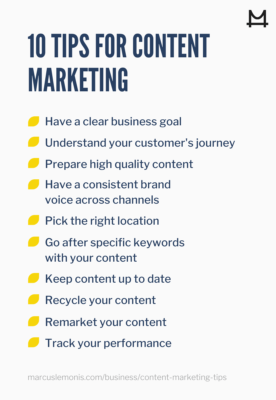
Credit: marcuslemonis.com
Content Repurposing
Content repurposing saves time and reaches more people. It means using one piece of content in different ways. This method helps you get more value from what you create. It also keeps your audience engaged by offering content in different formats.
Turning Blogs Into Videos
Videos attract attention and are easy to share. Take key points from your blog posts. Use simple tools to create short videos. Explain ideas clearly and use visuals to keep viewers interested. Videos can be posted on social media or your website.
Creating Infographics
Infographics show information in a clear, visual way. Use data and facts from your blogs. Design simple charts and icons to explain ideas. Infographics make complex topics easier to understand. Share them on social platforms or include in emails.
Updating Old Content
Old content can lose value over time. Check your blogs regularly for outdated information. Add new facts, examples, or images. Make content fresh and relevant again. Updated content improves search rankings and keeps readers interested.
Frequently Asked Questions
What Are The Best Content Marketing Tips For Beginners?
Start by understanding your audience and creating valuable content. Use SEO keywords naturally. Consistency and quality matter most. Promote your content on social media. Track performance and adjust strategies regularly for better results.
How Can I Improve Content Engagement Effectively?
Focus on creating interactive and relevant content. Use compelling headlines and visuals. Encourage comments and shares. Respond to audience feedback promptly. Personalize content to match user interests and needs for higher engagement.
Why Is Seo Important In Content Marketing?
SEO helps your content rank higher on search engines. It drives organic traffic and improves visibility. Using keywords and optimizing meta tags increase your content’s discoverability. SEO ensures your content reaches the right audience effectively.
How Often Should I Post Content For Marketing?
Consistency is key; post at least once a week. Regular updates keep your audience engaged and improve SEO. Find a posting frequency that matches your resources and audience preferences for best results.
Conclusion
Content marketing takes effort and patience to show results. Focus on creating helpful and clear content for your readers. Keep your messages simple and consistent. Use different channels to reach more people. Track what works and adjust your strategy often.
Good content builds trust and keeps your audience interested. Stay committed, and your marketing will improve step by step. Remember, small changes can make a big difference over time. Keep learning and adapting to succeed in content marketing.