Writing an article might seem tricky at first, but it doesn’t have to be. You have a message to share, and getting it down clearly can make all the difference.
Imagine your readers actually enjoying what you write and coming back for more. That’s exactly what you’ll learn here. Step by step, you’ll discover how to organize your thoughts, keep your readers hooked, and write with confidence. Ready to turn your ideas into a powerful article?
Let’s dive in and make your writing shine.

Credit: www.paragraphai.com
Choosing The Right Topic
Choosing the right topic is the first step in writing a great article. The topic guides your research and writing. It also helps attract the right readers. Picking a topic that fits your audience and interests is key. The right topic makes writing easier and more enjoyable.
Finding Your Audience
Knowing who you write for is important. Think about their age, interests, and needs. Write topics that solve their problems or answer questions. This keeps readers interested and coming back. When you understand your audience, your article becomes more useful.
Researching Trending Subjects
Check what topics are popular now. Use tools like Google Trends or social media to find hot subjects. Trending topics get more readers and shares. Choose a trending subject that fits your style and audience. This helps your article get noticed faster.
Crafting A Strong Title
Crafting a strong title is the first step to grab readers’ attention. A good title gives a clear idea of the article’s content. It makes people want to read more. A strong title can improve your article’s reach and clicks.
Using Power Words
Power words create emotion and interest. Words like ”easy,” ”best,” or ”quick” catch the eye. They make the title stand out. Use power words that match your article’s tone. They help the title feel exciting and useful.
Keeping It Clear And Concise
Clear titles tell exactly what the article is about. Avoid long or confusing titles. Short titles are easier to read and remember. Aim for no more than 60 characters. Clear and concise titles improve search engine ranking too.
Creating An Outline
Creating an outline is a crucial step in writing an article. It helps you arrange your thoughts and ideas clearly. An outline acts as a roadmap for your writing. It keeps your article focused and organized. Without an outline, your writing may become confusing or scattered.
Start by jotting down the main ideas you want to cover. Then, organize these ideas logically. This process saves time and effort during writing.
Organizing Main Points
List the main points that support your article’s topic. Put them in a clear order. Start with the most important or basic point. Follow with points that build on the previous ones. This helps readers follow your article easily. A well-ordered list makes your article flow smoothly.
Planning Subsections
Divide each main point into smaller parts. These are your subsections. Each subsection covers a specific detail or example. This breaks down complex ideas into simple parts. Subsections make your article easier to read. They also help you stay on topic. Plan your subsections before writing the full article.
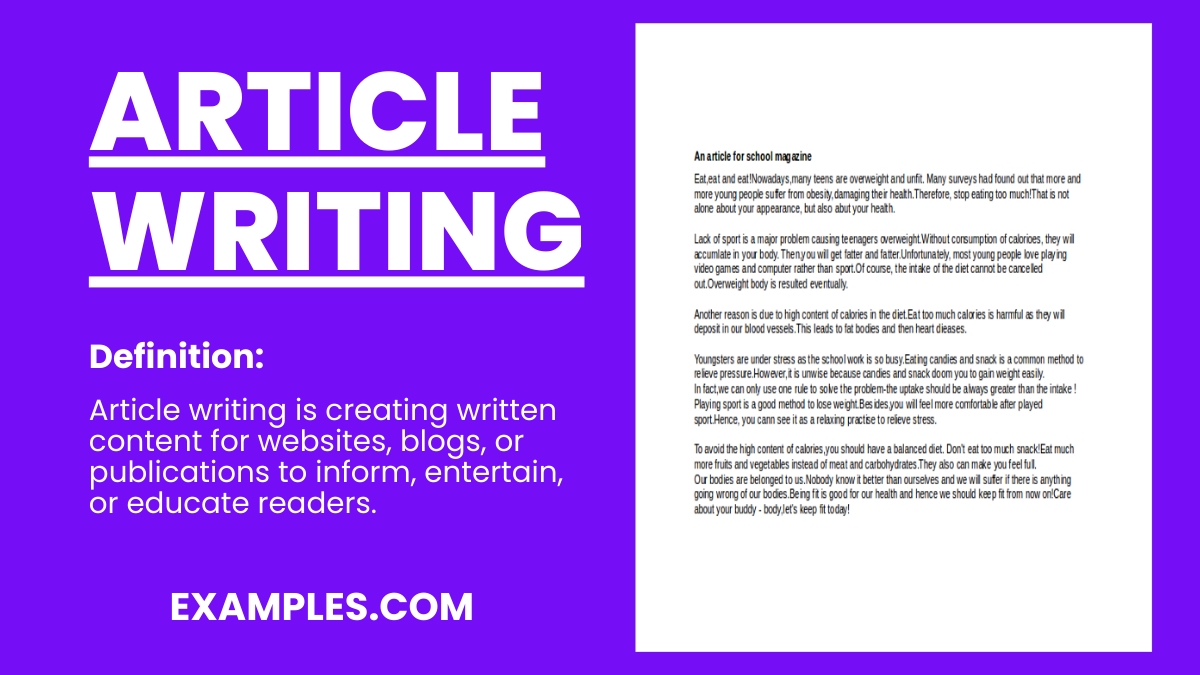
Credit: www.examples.com
Writing Engaging Introductions
Writing an introduction is the first step to grab attention. It sets the tone for the entire article. A good introduction makes readers want to continue. It should be clear and interesting. Keep it simple and direct. Avoid complicated words or long sentences. This helps readers understand your message quickly.
Hooking The Reader
Start with a strong sentence that catches interest. Ask a question or share a surprising fact. Use a short story or a bold statement. Make readers curious about what comes next. The goal is to pull them into the article. Avoid boring or common openings. Make the first line count.
Setting Expectations
Tell readers what the article is about. Explain what they will learn or find. Be honest and clear about the content. This builds trust and keeps readers engaged. Avoid vague or confusing descriptions. Let readers know why the article matters. Setting clear expectations keeps readers focused.
Developing Clear And Concise Content
Developing clear and concise content is key to writing a good article. Clear writing helps readers understand your message fast. Concise content keeps readers interested and avoids confusion.
Focus on delivering your ideas simply and directly. Avoid long, complicated sentences. Use words that everyone can understand. This approach makes your article stronger and easier to read.
Using Simple Language
Choose common words over complex ones. Simple words make your writing easy to follow. Short sentences work best. They help keep thoughts clear and sharp.
Explain ideas in a straightforward way. Avoid jargon or technical terms unless necessary. If you must use them, add a simple explanation.
Avoiding Fluff
Fluff means extra words that add no real meaning. Remove filler words like ”very,” ”really,” or ”just.” These do not improve your message.
Stick to the main points. Cut out repeated ideas or long examples. This keeps your article tight and focused. Readers will appreciate the clear, direct style.
Incorporating Visual Elements
Incorporating visual elements improves the appeal of your article. Pictures and graphics make your content easier to understand. They keep readers interested and help explain complex ideas. Visuals break up long text, making the article less tiring to read.
Using Images And Infographics
Images catch the eye quickly. Use clear, relevant pictures to support your points. Infographics show information in a simple and visual way. They make data easier to grasp. Choose high-quality images that match your article’s topic. Avoid clutter or unrelated visuals. A good image tells a story without many words.
Enhancing Readability
Visual elements help guide the reader’s focus. Use bullet points, charts, and diagrams to organize ideas. These tools make scanning the article faster. Readers find key facts without reading every line. Proper spacing around visuals prevents the page from looking crowded. Well-placed visuals balance text and images for smooth reading.
Editing For Speed And Quality
Editing an article fast and well takes practice. It helps make your writing clear and correct. The goal is to fix mistakes without losing your original ideas. Good editing keeps readers interested and improves your article’s quality.
Focus on cutting extra words and fixing errors. This saves time and makes the text easier to read. Use smart methods to speed up your editing. Balance speed with care to keep your work strong.
Self-editing Tips
Start by reading your article out loud. This helps catch awkward sentences and missing words. Break long sentences into shorter ones. Check for repeated ideas or unclear points. Use simple words and active voice. Fix grammar, spelling, and punctuation mistakes. Take short breaks between edits. Fresh eyes spot more errors.
Using Editing Tools
Use online tools to check grammar and spelling fast. Tools highlight errors and suggest fixes. They save time and reduce mistakes. Do not rely on tools alone. They miss some errors and context. Use tools as helpers, not editors. Combine tools with your own careful reading.

Credit: wordpress.com
Optimizing For Seo
Optimizing for SEO improves your article’s visibility on search engines. This helps more readers find your content. SEO involves several simple steps that make your article easier to understand by search engines. These steps also make your article more useful for readers.
Keyword Placement
Choose keywords that match your article topic. Place them naturally in the title and first paragraph. Use keywords in subheadings and throughout the text. Avoid stuffing keywords too many times. This can harm readability and SEO. Keep the flow smooth and clear for readers.
Meta Descriptions
Write a short summary of your article. Keep it under 160 characters. Include your main keyword in this summary. Meta descriptions appear on search results pages. They help readers decide to click on your article. Make it clear and inviting without overloading keywords.
Maintaining Consistency
Consistency is key to writing articles that attract readers and build trust. Writing regularly helps improve your skills and keeps ideas fresh. It also trains your mind to focus and finish tasks on time. Without consistency, writing can feel chaotic and overwhelming.
Staying consistent means setting clear goals and following a routine. It means tracking your progress to stay motivated. Small, steady steps lead to big results over time.
Setting A Writing Schedule
Create a daily or weekly writing plan. Choose specific times for writing and stick to them. Treat writing like an important appointment you cannot miss. This helps build a habit and makes writing easier.
Start with short sessions and increase time gradually. Consistency matters more than long hours. Regular writing keeps your brain active and ideas flowing.
Tracking Progress
Keep a simple log of your writing sessions. Note the date, time spent, and words written. Watching your progress boosts motivation and shows improvement. It also helps identify patterns, like the best time to write.
Use tools or notebooks to track your work. Checking your progress turns writing into a goal-oriented activity. It encourages you to write more and stay consistent.
Frequently Asked Questions
What Are The First Steps To Write A Good Article?
Start by researching your topic thoroughly. Create an outline with key points. Write a strong introduction to engage readers immediately.
How Do I Choose The Right Article Topic?
Pick a topic relevant to your audience and niche. Ensure it solves a problem or answers common questions. Use keyword research to find popular subjects.
How Long Should An Article Be For Seo?
Aim for 800 to 1500 words. This length allows detailed coverage without overwhelming readers. Focus on quality content over word count.
How To Write An Engaging Article Introduction?
Begin with a hook that grabs attention. Briefly state the article’s purpose. Use clear and simple language to keep readers interested.
Conclusion
Writing an article gets easier with practice and clear steps. Plan your ideas before you write. Use simple words and short sentences to keep readers interested. Check your work for mistakes and fix them. Reading your article out loud helps find errors.
Keep your focus on one main topic. Write regularly to improve your skills. Good articles share useful information clearly. Try these tips to write better articles each time. Writing well takes time, but anyone can do it. Just start and keep going.