Are you curious about how Salesforce is changing the way businesses grow? Knowing the latest Salesforce stats can give you a clear edge in your own work.
Whether you’re a marketer, salesperson, or business owner, these numbers reveal powerful trends that impact your success. Keep reading to discover surprising facts and insights that could boost your strategy and help you make smarter decisions right now.

Credit: finance.yahoo.com
Salesforce Growth Trends
Salesforce shows strong and steady growth over the years. It leads the CRM market with clear progress in revenue, users, and global presence. These trends reveal how the company expands its reach and influence worldwide.
Revenue Milestones
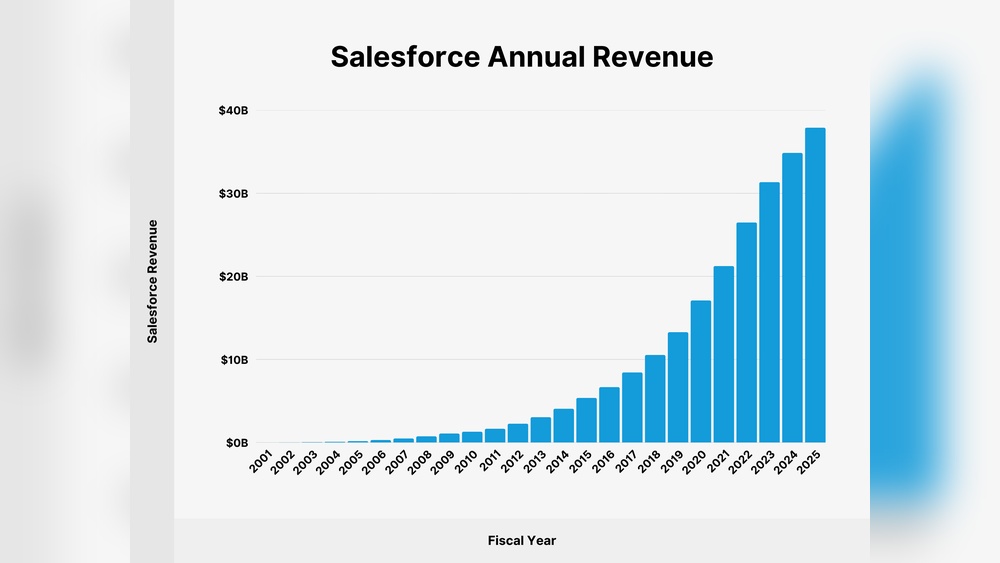
Salesforce’s revenue grows every year. It reached $31.4 billion in 2023. This marks steady growth from previous years. The company invests in new products and services. This helps keep the revenue rising. Strong sales from cloud services drive this success.
User Base Expansion
Millions use Salesforce daily. The platform has over 200,000 customers worldwide. Users include small businesses and large companies. More people adopt Salesforce for sales and marketing needs. The growth shows trust in the platform’s features and support.
Global Market Reach
Salesforce serves customers in over 100 countries. It opens offices in key markets like Europe and Asia. Local teams help meet different business needs. The company adapts to regional rules and languages. This global reach pushes Salesforce’s growth further.
Market Position And Competitors
Salesforce holds a strong position in the cloud software market. It leads many businesses in managing customer relations and sales processes. Its market position shows its wide acceptance and trust among users worldwide.
Understanding Salesforce’s market position helps to see how it competes with other companies. It also reveals the reasons behind its growth and popularity in various industries.
Market Share Analysis
Salesforce controls about 20% of the global CRM market. This makes it the largest CRM provider by market share. Its cloud-based services attract businesses of all sizes. The steady growth in subscribers boosts its market presence.
Salesforce’s revenue keeps rising each year. This growth reflects its expanding client base and product range. Its market share remains well ahead of many competitors.
Key Competitors Comparison
Microsoft Dynamics 365 and Oracle CRM are Salesforce’s main competitors. Microsoft offers strong integration with its other software products. Oracle focuses on large enterprises with complex needs.
HubSpot serves small and medium businesses with simpler CRM tools. Zoho CRM provides affordable solutions for startups and smaller teams. Salesforce stands out with extensive features and customization options.
Each competitor targets different customer segments. Salesforce’s broad appeal gives it an edge over most rivals.
Industry Leadership
Salesforce is a leader in cloud-based CRM solutions. It invests heavily in innovation and new technologies. Its user-friendly platform attracts many industries, from retail to finance.
The company sets trends in customer experience and automation. It also supports a strong partner ecosystem worldwide. Salesforce’s leadership influences the future of CRM and business software.
Product Innovation Highlights
Salesforce continues to push the boundaries of technology with frequent product updates. These innovations help businesses work faster and smarter. The focus remains on improving user experience and delivering effective tools.
Every update brings new capabilities that enhance productivity. Artificial intelligence and automation are key parts of these changes. Real customer stories show the impact of these innovations in real life.
New Features And Updates
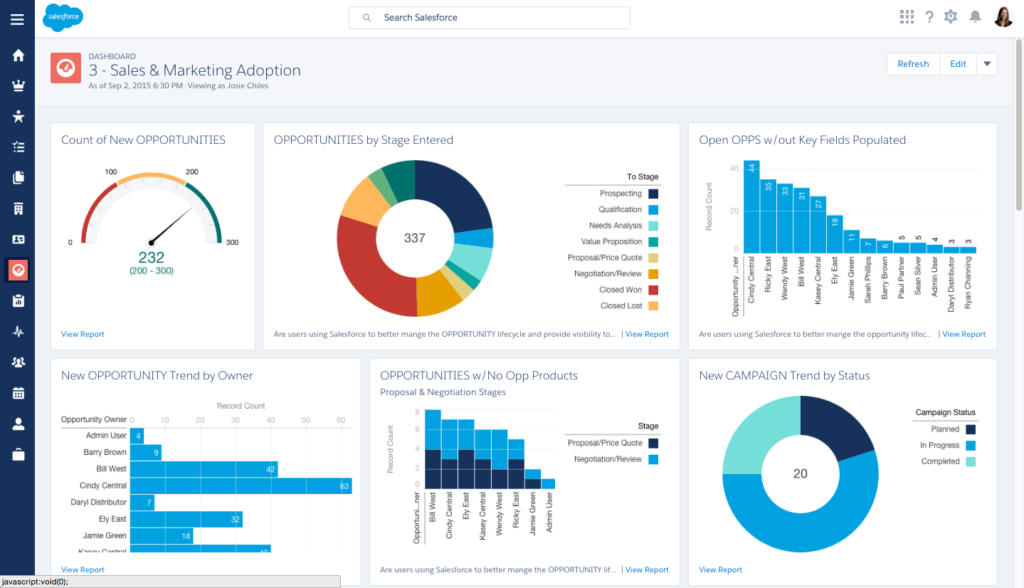
Salesforce regularly releases updates to its platform. These include improved dashboards and better data visualization tools. Users get access to more customization options. Mobile app enhancements make work easier on the go. These updates help teams manage tasks more efficiently.
Ai And Automation Integration
Salesforce integrates AI to simplify complex processes. Automated workflows reduce manual work and errors. AI-powered predictions help businesses make smarter decisions. Chatbots provide quick customer support around the clock. These tools save time and increase accuracy.
Customer Success Stories
Many companies have improved sales using Salesforce innovations. One retailer boosted customer engagement with AI-driven insights. A service provider reduced response times through automation. These stories prove the real value of Salesforce tools. They inspire others to adopt new technology.
Credit: ascendix.com
Customer Demographics
Salesforce serves a wide range of customers worldwide. Understanding who uses Salesforce helps businesses see its reach. Customer demographics reveal important details about users and their needs.
This section explores where Salesforce is most popular and which types of companies use it. It also shows how users spread across regions. These insights help explain Salesforce’s broad appeal.
Industry Adoption Rates
Salesforce is popular in many industries. Technology companies lead in adoption. Financial services and healthcare also use Salesforce a lot. Retail and manufacturing industries follow closely. Each industry uses Salesforce to solve unique challenges.
Company Size Distribution
Salesforce serves businesses of all sizes. Small and medium businesses make up a large part of users. Large enterprises also rely on Salesforce for complex needs. The platform scales easily to fit different company sizes.
Geographical User Breakdown
North America holds the largest share of Salesforce users. Europe comes next with strong adoption. Asia-Pacific is growing fast in Salesforce use. Other regions are starting to increase their user base as well.
Salesforce Ecosystem Growth
The Salesforce ecosystem shows strong and steady growth. It connects businesses, partners, and developers worldwide. This growth helps companies improve customer relations and business processes. Many factors contribute to this expanding network.
Salesforce keeps adding new partners, apps, and developers. These elements create a powerful and diverse platform. The ecosystem’s growth reflects its value and reach in the business world.
Partner Network Expansion
Salesforce’s partner network grows each year. Thousands of companies join to offer services and solutions. These partners help clients customize Salesforce for their needs. More partners mean more support and innovation.
The network includes consulting firms, system integrators, and technology providers. Their collaboration improves the overall Salesforce experience. Businesses benefit from expert advice and tailored solutions.
Appexchange Trends
AppExchange is Salesforce’s app marketplace. It hosts thousands of apps built by partners and developers. The number of apps continues to rise steadily. This growth shows strong demand for customized tools.
Apps cover sales, marketing, customer service, and more. Users find apps that fit their business size and industry. Increased app variety helps companies work smarter and faster.
Developer Community
Salesforce has a large and active developer community. Developers create new features and apps regularly. The community shares knowledge through forums, events, and training. This helps others learn and improve their skills.
More developers mean faster innovation and better solutions. The community’s growth ensures Salesforce stays up to date. Developers play a key role in the ecosystem’s success.
Credit: backlinko.com
Future Market Predictions
The future of Salesforce shows strong growth and new paths. Experts predict more companies will use Salesforce for sales, marketing, and service. This growth will bring fresh chances and some hurdles. Understanding these helps businesses plan better.
Emerging Opportunities
Salesforce is growing beyond traditional CRM. It now supports AI, analytics, and automation tools. These tools help companies work smarter and faster. New industries like healthcare and finance are adopting Salesforce. Small and medium businesses also find it easier to use. This opens more chances for growth and innovation.
Potential Challenges
Growth brings challenges. One issue is data privacy and security. Companies must protect customer data carefully. Another challenge is the cost of Salesforce solutions. Some businesses find pricing hard to manage. Also, the system’s complexity can slow down adoption. Training staff and keeping up with updates takes effort.
Strategic Initiatives
Salesforce is working to solve these challenges. They improve user experience with simpler interfaces. Pricing models are becoming more flexible for smaller firms. Salesforce invests in stronger security features. They also support partners to deliver better services. These steps help businesses use Salesforce more effectively.
Frequently Asked Questions
What Is Salesforce’s Current Market Share In Crm?
Salesforce holds over 20% of the global CRM market. It leads due to its extensive features and cloud solutions. This dominance reflects high adoption by businesses of all sizes worldwide.
How Many Users Does Salesforce Have Globally?
Salesforce boasts over 150,000 customers and millions of users worldwide. Its user base spans various industries, highlighting its versatility and robust platform capabilities.
What Is Salesforce’s Annual Revenue Growth Rate?
Salesforce’s annual revenue growth rate exceeds 20%. This consistent growth showcases strong demand and successful product expansion in cloud-based CRM services.
How Does Salesforce Impact Business Productivity?
Salesforce improves productivity by automating sales and customer service tasks. It enables better data management, collaboration, and decision-making, boosting overall efficiency.
Conclusion
Salesforce continues to grow and shape the business world. Its tools help companies connect with customers easily. Many businesses trust Salesforce for sales, marketing, and service needs. The stats show strong user adoption and global reach. This platform keeps evolving to meet changing demands.
Understanding these numbers helps in making smart decisions. Watch how Salesforce impacts your industry next. The data tells a clear story of success. Keep an eye on future trends and updates. Salesforce remains a key player in digital business.