Are you curious about how many people actually click on your Google search results? Understanding Google CTR stats can unlock powerful insights to boost your website’s traffic.
When you know where your clicks come from and how they compare to others, you can make smarter decisions to improve your online presence. This article will break down the key numbers and reveal simple ways you can increase your click-through rate.
Keep reading to discover what your CTR really means and how to make it work for you.
Google Ctr Basics
Understanding Google CTR basics is essential for any website owner. CTR stands for Click-Through Rate. It shows how often people click on your link after seeing it in search results.
Knowing CTR helps you improve your website’s performance. It tells you which titles and descriptions attract users. This data guides better content and SEO strategies.
What Is Ctr
CTR is the percentage of clicks your site gets from views. For example, if 100 people see your link and 5 click it, your CTR is 5%. It measures interest and relevance in search results.
A higher CTR means your link is more attractive to users. It often depends on your title, meta description, and search snippet quality.
Why Ctr Matters For Rankings
Google uses CTR as a signal to rank pages. A high CTR suggests your page matches user intent. This can lead to better rankings on search results.
Improving CTR can increase your site traffic without changing your position. It also shows Google that your content is useful and relevant.
Focus on clear, engaging titles and descriptions to boost CTR. Small changes can make a big difference in clicks and rankings.

Credit: firstpagesage.com
Analyzing Google Ctr Data
Analyzing Google CTR data helps you understand how many people click your links. This data shows how well your pages attract visitors from search results. It reveals which titles and descriptions work best. You can improve your content and increase traffic by studying CTR data closely.
Understanding the source and meaning of CTR metrics is key. This knowledge guides your SEO strategy and content updates. Let’s explore where CTR data comes from and how to read it properly.
Sources Of Ctr Data
Google Search Console is the main source of CTR data. It shows clicks, impressions, and click-through rates for your pages. Other tools like Google Analytics offer related data but focus less on CTR. Some SEO tools collect and analyze CTR from search results too.
CTR data comes mostly from desktop and mobile searches. It shows how users interact with your site link in organic results. Paid ads have separate CTR reports in Google Ads. For SEO, Search Console remains the best CTR data source.
Interpreting Ctr Metrics
CTR means the percentage of clicks per impressions. If your page shows 100 times and gets 10 clicks, CTR is 10%. A higher CTR means your link attracts more clicks from users. Low CTR suggests the title or snippet may need improvement.
Compare CTR across different pages and keywords. Look for patterns in what performs well. Check CTR alongside rankings to get full insight. Some queries have naturally low CTR due to intent or competition.
Use CTR data to test changes in titles and meta descriptions. Small improvements can increase clicks significantly. Keep monitoring CTR regularly to track progress and adjust your strategy.
Ctr Benchmarks By Industry
Click-through rate (CTR) varies a lot by industry. Different businesses see different CTR averages. Knowing these benchmarks helps set realistic goals. It also guides marketing strategies to improve online success.
Understanding industry-specific CTR shows where your site stands. This insight helps you focus on areas needing improvement. Let’s explore CTR trends in key sectors below.
E-commerce Ctr Trends
E-commerce sites often see CTRs between 2% and 3.5%. Product listings with clear images and prices get higher clicks. Seasonal sales and promotions boost CTR significantly. Mobile users tend to click more on fast-loading pages. Detailed product descriptions increase user interest and clicks.
B2b Ctr Patterns
B2B websites usually have lower CTRs, around 1% to 2%. These buyers research longer before clicking links. Content like case studies and whitepapers attract more clicks. LinkedIn ads and email campaigns often show better CTRs. Clear calls to action help improve B2B CTRs.
Local Business Ctr Averages
Local businesses see CTRs near 3% to 5%. Location-based searches drive higher engagement. Google My Business listings improve click rates. Reviews and ratings also encourage clicks from local customers. Fast response times on mobile increase local CTR.
Credit: backlinko.com
Factors Influencing Google Ctr
Google Click-Through Rate (CTR) depends on many factors. These factors affect how many people click on your link in search results. Understanding them helps improve your website traffic.
Small changes in your page’s appearance on Google can change CTR a lot. Below are key elements that influence Google CTR.
Title Tags And Meta Descriptions
Title tags are the main headline shown on search results. They must be clear and include important keywords. A strong title grabs attention and tells what the page is about.
Meta descriptions appear under the title. They give a short summary of the page content. Well-written meta descriptions make users want to click through. Both title tags and meta descriptions should be relevant and inviting.
Rich Snippets And Structured Data
Rich snippets add extra details to your search listing. These can be ratings, images, prices, or other info. Structured data helps Google understand your page better. This data makes your listing look special and stand out.
Rich snippets increase trust and interest. Users often click on listings with extra info. Using structured data can raise your CTR significantly.
Mobile Vs Desktop Ctr Differences
CTR changes depending on the device used. Mobile users tend to scroll less and click more on top results. Desktop users may explore more results on the page.
Mobile search results are often shorter and simpler. This limits space for titles and descriptions. Optimizing for mobile means making titles and descriptions clear and quick to read.
Understanding device differences helps tailor your content. This improves user experience and increases CTR across platforms.
Strategies To Improve Ctr
Improving your Google click-through rate (CTR) helps bring more visitors to your website. Small changes to your search listings can make a big difference. Focus on making your titles, descriptions, and page data clear and attractive. This encourages people to click on your links instead of others.
Crafting Compelling Titles
Titles are the first thing users see in search results. Use clear and direct words to describe your page. Include important keywords naturally. Keep your titles under 60 characters so they do not get cut off. Make sure each title matches the page content. A good title builds interest and trust quickly.
Optimizing Meta Descriptions
Meta descriptions show a short summary under the title. Write descriptions that explain the page clearly. Use simple language and include main keywords. Keep descriptions between 150 and 160 characters for full display. A well-written description helps users decide to click your link.
Using Schema Markup Effectively
Schema markup adds extra details to your search listings. It helps search engines understand your content better. Use schema to show ratings, prices, events, or other key info. This makes your listing stand out with rich snippets. Rich snippets attract more attention and increase CTR.
Impact Of Ctr On Seo Rankings
Click-Through Rate (CTR) plays a key role in SEO rankings. It shows how often users click on a search result. A higher CTR means more people find the result useful or relevant. Search engines notice this behavior. They may rank pages with higher CTRs better. This makes CTR a valuable metric for SEO strategies.
Improving CTR can lead to better visibility in search results. It also brings more organic traffic to websites. Small changes in titles and descriptions can boost CTR. This helps search engines understand user preferences. Tracking CTR helps identify which pages perform well. It guides SEO efforts for better results.
Correlation Between Ctr And Ranking
Studies show a strong link between CTR and ranking. Pages with higher CTR often rank higher on Google. Search engines use CTR as a signal of page relevance. If many users click a result, it suggests quality content. This feedback loop can improve a page’s position. Low CTR may indicate less useful content. Google may lower the ranking of such pages.
CTR is not the only ranking factor but it influences rankings. It works alongside content quality, backlinks, and site speed. A good CTR can help pages move up in search results. This makes optimizing titles and meta descriptions vital. They attract clicks and improve the page’s chance to rank well.
Case Studies On Ctr Improvements
Many websites have boosted SEO by improving CTR. One site changed its title tags to be more clear and relevant. The CTR rose by 20%, and rankings improved within weeks. Another case showed that adding numbers to titles increased clicks. This simple change lifted the page from page two to page one.
Some businesses tested different meta descriptions to attract users. Better descriptions increased CTR by 15% to 30%. This helped pages rank higher for competitive keywords. Case studies prove that small tweaks can impact SEO greatly. Focusing on CTR can bring steady, positive results over time.
Tools For Monitoring Ctr
Tracking your website’s click-through rate (CTR) helps understand user interest. Using the right tools makes monitoring easy and clear. These tools show which pages attract clicks and which need improvement.
Monitoring CTR regularly helps improve your site’s performance. It shows how well your titles and descriptions work. Let’s explore some popular tools used for this purpose.
Google Search Console
Google Search Console is a free tool from Google. It shows how often your site appears in search results. You can see the CTR for each page and keyword. The tool highlights which queries bring visitors to your site. It helps find pages with low CTR that need better titles or descriptions. The data updates regularly, giving fresh insights.
This tool also shows your average position in search results. Combining position and CTR data guides your SEO efforts. It’s easy to use and trusted by many website owners.
Third-party Analytics Tools
Many third-party tools track CTR alongside other website metrics. Tools like Ahrefs, SEMrush, and Moz offer detailed CTR reports. They provide data on keywords, competitors, and overall traffic. These tools often include visual charts for easier analysis.
Third-party tools can show CTR trends over time. They help spot opportunities to improve your content. Some tools offer alerts for sudden CTR changes. They require a subscription but offer deeper insights.
Credit: www.advancedwebranking.com
Frequently Asked Questions
What Is The Average Google Ctr For Organic Results?
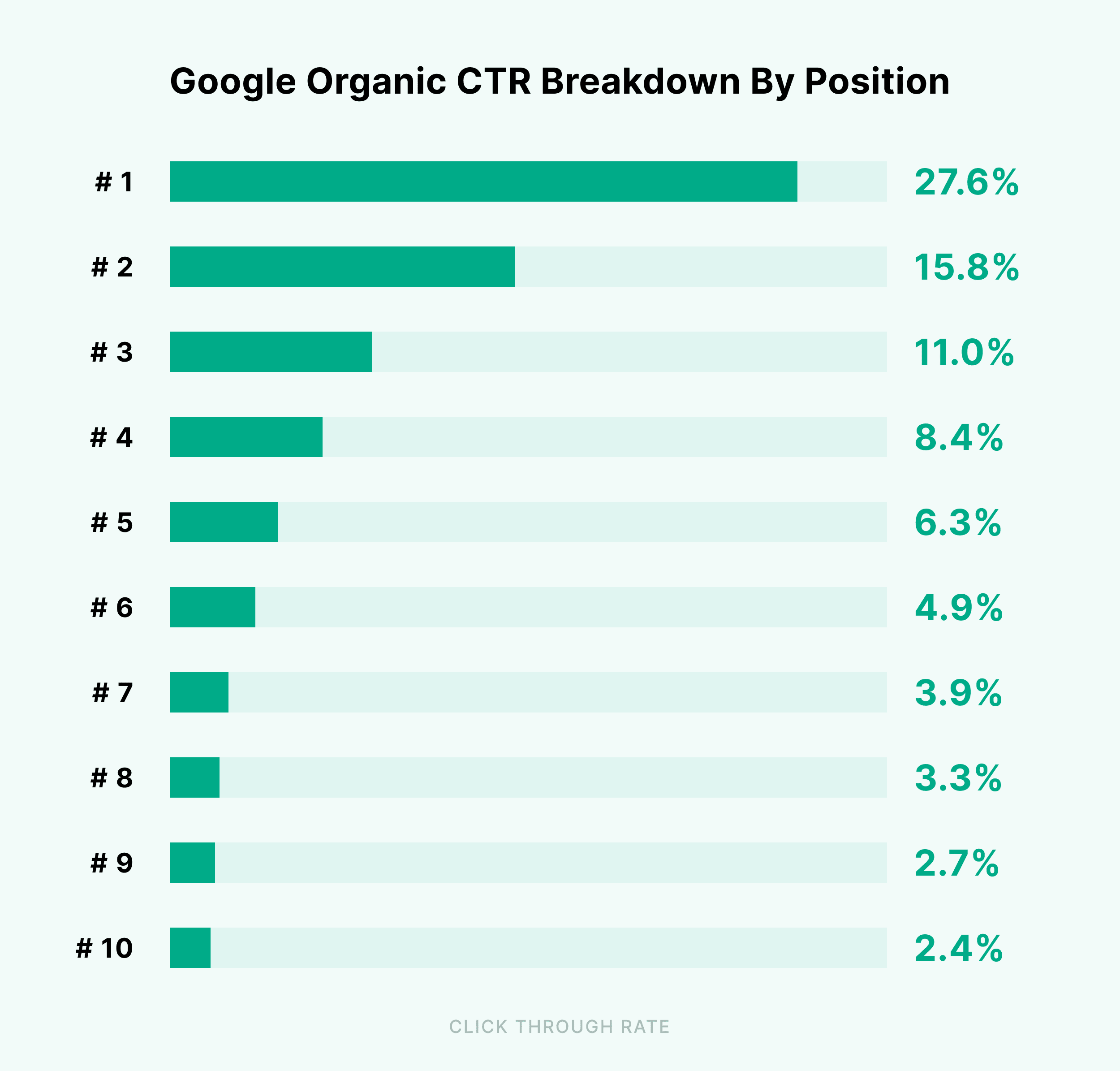
The average Google CTR for organic results varies by position. The first result gets about 30-35% clicks, while lower ranks receive fewer clicks. Understanding this helps optimize your SEO strategy for better traffic.
How Does Google Ctr Affect Search Rankings?
Google considers CTR as a user engagement signal. Higher CTR can indicate relevance, potentially improving rankings. However, it is one of many factors Google uses to rank pages.
What Factors Influence Google Ctr Statistics?
Google CTR depends on title relevance, meta description, position, and snippet appearance. Rich snippets and ads also impact CTR. Optimizing these elements boosts your click-through rate.
How Can I Improve My Google Ctr Effectively?
Improve Google CTR by crafting compelling titles and meta descriptions. Use keywords naturally and add schema markup for rich results. Testing different approaches helps find what resonates with users.
Conclusion
Google CTR stats reveal how users interact with search results. Higher CTR means more visitors to your website. Focus on improving titles and descriptions to attract clicks. Keep your content relevant and clear to meet user needs. Regularly check CTR data to spot trends and issues.
Small changes can lead to better results over time. Stay patient and keep testing different strategies. Understanding CTR helps you grow your online presence steadily.