Are you curious about the different large language models (LLMs) available right now? Whether you want to boost your projects, improve your writing, or explore new technology, knowing which LLMs are out there can make a big difference.
This list of LLMs will help you quickly find the right model for your needs. By the end, you’ll have a clear understanding of your options and how to use them to get the best results. Keep reading—you won’t want to miss this!

Credit: flatteredwithflutter.com
Leading Llms In 2025
Leading large language models (LLMs) in 2025 show strong growth in understanding and generating text. These models help people with writing, coding, and learning new topics. Each model has unique strengths and updates that improve their use.
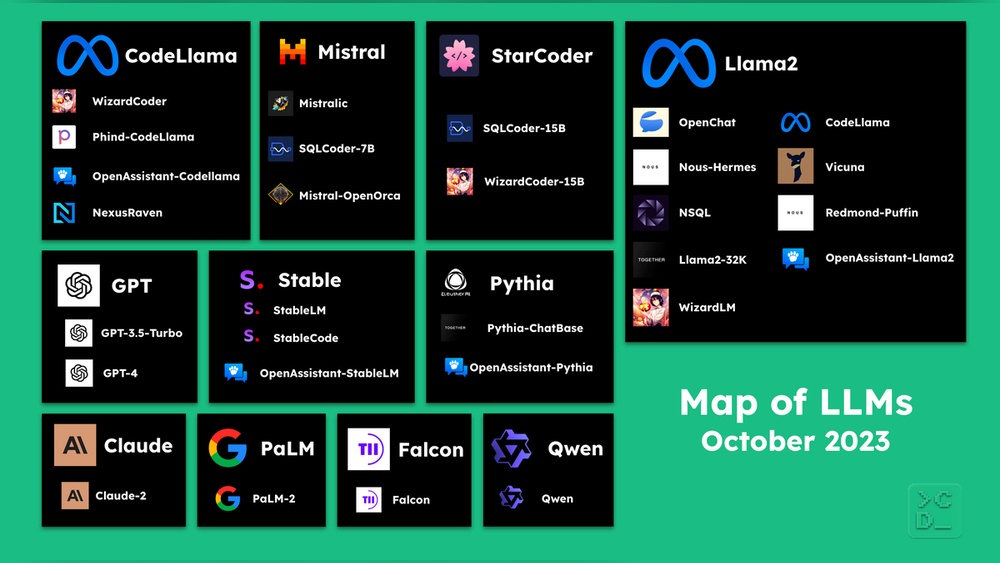
Top companies like OpenAI, Google, Meta, and Anthropic continue to develop smarter and faster LLMs. Their latest versions offer better accuracy and more natural conversations. Here is a look at the most important LLMs in 2025.
Openai’s Gpt-5
OpenAI’s GPT-5 improves language understanding and creativity. It generates clearer and more relevant responses. GPT-5 handles complex questions with better accuracy. It also supports multiple languages, making it useful worldwide.
Developers use GPT-5 in apps for writing help and customer support. The model adapts quickly to different topics. It learns from fewer examples, saving time and resources.
Google’s Bard Evolution
Google’s Bard focuses on more natural and friendly conversations. Its latest update makes it better at following user instructions. Bard can answer tricky questions and give detailed explanations. It connects with real-time data for current information.
This LLM is popular for chatbots and virtual assistants. Bard’s design helps users feel understood and supported. It also improves in summarizing long texts clearly.
Meta’s Llama Updates
Meta’s LLaMA offers a lighter and faster LLM option. The updates improve efficiency on smaller devices. LLaMA supports custom training for specific tasks. It works well in research and business settings.
Meta focuses on making LLaMA more accessible to developers. This model balances power and speed for everyday use. It also helps create tools for education and creativity.
Anthropic’s Claude Advances
Anthropic’s Claude emphasizes safety and ethical AI use. The advances reduce harmful or biased outputs. Claude learns to follow user guidelines closely. It aims to be a trustworthy assistant in many areas.
Claude is used in healthcare, law, and other sensitive fields. Its design promotes clear and respectful communication. Anthropic updates keep Claude aligned with user needs.
Credit: github.com
Emerging Llm Tools
Emerging LLM tools are reshaping how we use language models today. These new tools focus on specific needs and offer fresh capabilities. They bring smart solutions for both businesses and individuals. These tools help make AI more useful and accessible.
Smaller Specialized Models
Smaller specialized models focus on particular tasks. They need less computing power and run faster. These models excel in areas like healthcare, finance, or legal advice. Their design helps deliver accurate results for specific jobs. Users find them easier to deploy and manage.
Multimodal Language Models
Multimodal language models work with text, images, and sounds. They understand and create content from different types of data. This ability makes communication richer and more natural. These models support tasks like image captioning and video analysis. They offer broader ways to interact with AI.
Open-source Llm Innovations
Open-source LLMs invite developers to improve and share models freely. They encourage collaboration and faster progress in AI tools. These models provide transparency and flexibility for users. Many startups and researchers use open-source LLMs to build custom solutions. This openness drives creativity and new ideas.
Applications Transforming Industries
Large Language Models (LLMs) have changed how many industries work. These tools help businesses and organizations do tasks faster and better. They analyze data, create content, and solve problems. Each field uses LLMs in different ways to improve results and save time.
Healthcare And Medical Research
LLMs assist doctors by analyzing medical records quickly. They help find patterns in patient data. This supports better diagnosis and treatment plans. Researchers use LLMs to read studies and summarize findings. They speed up drug discovery by predicting molecule behavior. Patients get faster answers through AI chatbots. These tools improve care quality and reduce errors.
Finance And Risk Management
Banks and firms use LLMs to study market trends. They detect fraud by spotting unusual activity. These models help predict financial risks with more accuracy. They automate reports and customer service tasks. LLMs assist in making smarter investment choices. This lowers losses and improves profit chances.
Education And Personalized Learning
LLMs create custom lessons based on student needs. They answer questions and explain concepts clearly. Teachers get help grading and planning classes. Students learn at their own pace with AI tutors. These models make education more accessible and fun. They support better understanding for all learners.
Creative Content Generation
Writers use LLMs to draft articles and stories fast. These tools suggest ideas and improve text quality. Marketers create ads and social media posts easily. LLMs generate scripts, poems, and other creative works. They save time and help creativity flow. Content creators reach audiences with fresh, clear writing.
Performance And Efficiency Gains
Performance and efficiency gains in large language models (LLMs) have become a key focus for developers. Improving these areas helps models run faster and use less power. This leads to better user experiences and lower costs. Understanding these gains shows how LLMs evolve and serve daily needs.
Model Optimization Techniques
Developers use many methods to make LLMs faster and smaller. Techniques like pruning remove unneeded parts of the model. Quantization cuts the size of numbers the model uses. Both reduce memory and speed up processing. These changes keep quality high while lowering resource use.
Energy Consumption Reduction
Energy use is a major concern in running LLMs. Better hardware and efficient coding reduce power needs. Some models use fewer calculations to save energy. This helps data centers cut electricity costs. It also makes AI tools more eco-friendly.
Real-time Language Processing
Faster LLMs allow real-time responses in apps and devices. This is key for chatbots and virtual assistants. Quick replies improve user satisfaction and engagement. Efficient models handle many requests without lag. Real-time processing makes AI practical for daily tasks.
Ethical And Regulatory Trends
Ethical and regulatory trends shape how Large Language Models (LLMs) develop and operate. These trends focus on making LLMs safe, fair, and respectful of user rights. As LLMs grow in use, addressing ethical issues becomes more urgent.
Regulations guide creators to build responsible AI. They protect users and help avoid harm from biased or unsafe outputs. Understanding these trends is key to using LLMs wisely.
Bias Mitigation In Llms
Bias in LLMs can lead to unfair or harmful results. Developers work to reduce bias by improving training data. Diverse and balanced data helps LLMs treat all groups fairly. Testing models for bias is common before release. Reducing bias builds trust and fairness in AI tools.
Data Privacy Standards
Data privacy is crucial in LLM development. Models learn from large datasets, some containing personal information. Regulations like GDPR limit how data is collected and used. Companies must protect user data and keep it confidential. Strong privacy standards prevent misuse and build user confidence.
Ai Governance Frameworks
Governance frameworks set rules for AI creation and use. They include ethical guidelines and legal requirements. Many organizations create policies to ensure safe AI deployment. Frameworks cover transparency, accountability, and user rights. They help control risks and promote responsible AI growth.
Future Directions For Llms
Large Language Models (LLMs) continue to grow and shape the future of technology. Their development opens new paths for many fields. These models will become smarter, faster, and more useful in daily tasks. The coming years will show exciting changes in how LLMs work and interact with other systems.
Integration With Other Ai Technologies
LLMs will work closely with other AI tools. Combining vision, speech, and language models will create richer experiences. This teamwork helps machines understand complex problems better. It allows new applications like smart assistants and automated content creation. These combined AI systems will be more flexible and powerful.
Human-ai Collaboration Enhancements
LLMs will improve how people and machines work together. They will offer clearer responses and better suggestions. This helps users make decisions faster and easier. Tools will become more interactive and understand user needs. The focus is on creating smooth and helpful communication between humans and AI.
Expanding Multilingual Capabilities
Future LLMs will support more languages and dialects. They will help break language barriers in communication. This makes knowledge and technology accessible worldwide. Models will better understand cultural context and slang. Such growth will connect people globally through language.

Credit: blog.n8n.io
Frequently Asked Questions
What Are The Most Popular Llms Available Today?
The most popular LLMs include GPT-4, BERT, RoBERTa, and T5. These models excel in language understanding and generation tasks. They are widely used in AI applications, such as chatbots, translation, and content creation, due to their advanced capabilities.
How Do Llms Differ From Traditional Language Models?
LLMs are larger and trained on more data than traditional models. They understand context better and generate more coherent text. This makes them more effective in complex tasks like summarization, translation, and conversation.
Which Industries Benefit Most From Using Llms?
Industries like healthcare, finance, education, and marketing benefit greatly. LLMs improve customer service, automate content creation, and enhance data analysis. They help businesses save time and increase efficiency with natural language processing.
Are Open-source Llms As Effective As Proprietary Ones?
Open-source LLMs are highly effective and customizable for various tasks. However, proprietary LLMs often have larger datasets and optimization. Choice depends on specific use cases, budget, and privacy requirements.
Conclusion
This list of LLMs helps you know popular language models today. Each model has unique features and uses. Choose one that fits your needs best. LLMs keep growing and changing fast. Stay curious and explore new options often. Understanding these tools can boost your work and learning.
Keep this guide handy for easy reference. You now have a clear starting point. Ready to dive deeper into language models?