


Are you struggling to reach the right businesses and grow your network? Finding the right B2B marketing strategies can change everything for your company.
When you know how to connect with other businesses effectively, you open doors to new opportunities and steady growth. You’ll discover simple yet powerful tactics that can boost your reach, build trust, and turn prospects into loyal partners. Keep reading to unlock the secrets that can make your marketing efforts work smarter, not harder.
Targeting The Right Audience
Targeting the right audience is key to B2B marketing success. You need to reach businesses that truly need your product or service. This saves time and money. It also improves your chances of closing deals. Knowing who your ideal clients are helps you create better messages. It guides your marketing efforts in the right direction.
Focus on understanding your audience deeply. Learn about their challenges and goals. This knowledge shapes your marketing strategies to fit their needs. Below are steps to help you target the right audience effectively.
Identifying Ideal Buyer Personas
Buyer personas represent your perfect customers. They include details like job roles, company size, and industry. Understanding their pain points and goals matters. Talk to existing clients and sales teams. Use surveys and interviews. Create clear profiles that describe who buys your product. These personas guide your marketing messages and campaigns.
Segmenting Your Market
Divide your market into smaller groups with shared traits. Segments can be based on industry, location, or company size. This lets you tailor messages to each group. Personalized marketing feels more relevant. It increases engagement and response rates. Segmenting also helps allocate your budget wisely to the best opportunities.
Leveraging Data For Precision
Use data to target your audience more accurately. Analyze website visits, email responses, and social media behavior. Data reveals who interacts with your brand most. Use tools like CRM and analytics platforms. These insights refine your campaigns and improve results. Data-driven marketing reduces guesswork and boosts efficiency.
Optimizing Content Marketing
Optimizing content marketing is key to successful B2B strategies. It helps attract the right audience and builds trust. Good content educates potential clients and shows your expertise.
Focus on creating content that answers questions and solves problems. The goal is to make your audience see your brand as helpful. This approach encourages engagement and drives leads.
Creating Valuable Educational Content
Write clear and useful content. Explain concepts simply. Use how-to guides, tips, and industry news. Help readers learn something new. Avoid jargon that confuses non-experts. Educational content builds credibility and keeps readers coming back.
Utilizing Case Studies And Testimonials
Share real stories from your clients. Show how your product or service solved their problems. Use clear examples and results. Testimonials add trust and proof. They make your claims believable and relatable.
Implementing Seo Best Practices
Use keywords that your audience searches for. Place them naturally in titles, headers, and text. Optimize meta descriptions and image tags. Make your content easy to read and fast to load. Good SEO helps your content reach more people.
Enhancing Lead Generation
Lead generation is key in B2B marketing. It helps businesses find new customers and grow sales. Enhancing lead generation means using smart strategies to attract and capture potential clients’ interest. This section covers three important methods to improve lead generation.
Using Landing Pages Effectively
Landing pages focus on one goal: getting visitors to take action. They remove distractions and highlight the offer clearly. Use a strong headline that grabs attention fast. Keep the page simple, with only necessary information. Add a form to collect visitor details. Test different designs to see what works best.
Incorporating Calls-to-action
Calls-to-action (CTAs) guide visitors on what to do next. Use clear and direct phrases like “Download Now” or “Get a Quote.” Place CTAs where visitors can easily see them, such as at the top and bottom of pages. Make buttons stand out with color and size. Limit the number of CTAs to avoid confusion.
Employing Email Marketing Campaigns
Email marketing keeps your business in front of leads. Send personalized messages that match their interests. Use short subject lines that spark curiosity. Include a clear CTA in every email. Segment your list to target different groups with relevant content. Track results and adjust messages for better responses.
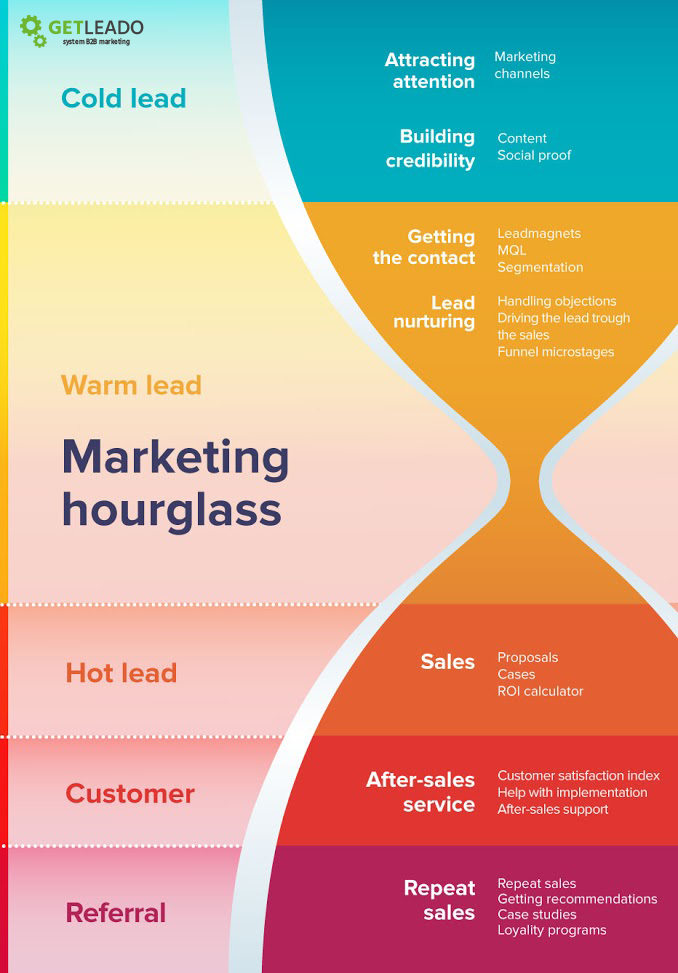
Credit: gtmnow.com
Leveraging Social Media Channels
Social media channels offer many chances for B2B marketing. They help businesses connect with other companies and professionals. Using social media well can boost brand awareness and build strong relationships.
Choosing the right social media platforms is key. Sharing useful content builds trust and shows expertise. Paid ads help reach more specific audiences quickly and effectively.
Choosing Platforms For B2b Success
Not all social media platforms work the same for B2B. LinkedIn is ideal for professional networking and sharing industry news. Twitter helps share quick updates and join conversations. Facebook can target specific groups and communities. Focus on platforms where your audience spends time. Avoid spreading your efforts too thin. Quality over quantity wins in social media marketing.
Building Thought Leadership
Share insights and industry knowledge regularly. Post articles, case studies, and tips that help other businesses. Use simple language to explain complex ideas. Engage with followers by answering questions and joining discussions. This builds trust and shows your company’s expertise. Consistent sharing helps your brand become a go-to resource.
Engaging Through Paid Ads
Paid ads target specific business audiences based on job titles or industries. They increase visibility quickly and bring more leads. Use clear, direct messages in your ads. Include a strong call to action. Test different ads to see what works best. Paid ads can complement organic efforts and drive faster results.
Utilizing Account-based Marketing
Account-Based Marketing (ABM) focuses on targeting specific companies. It helps businesses build stronger relationships with key clients. ABM is a precise approach that aligns marketing and sales teams. This strategy aims to deliver tailored messages to the right decision-makers. It improves efficiency by concentrating efforts on high-value accounts.
Targeting High-value Accounts
Start by identifying the companies that matter most. These accounts have the highest potential for revenue. Research their needs, challenges, and business goals. Use data to select accounts that fit your ideal customer profile. Targeting fewer, high-value accounts saves time and resources.
Personalizing Outreach Efforts
Personalization is key in ABM. Craft messages that speak directly to each account’s needs. Use insights from research to tailor emails, content, and offers. Show understanding of their business and pain points. Personalized outreach builds trust and increases engagement rates.
Measuring Abm Performance
Track the success of your ABM campaigns regularly. Use metrics like engagement, pipeline growth, and deal size. Monitor responses from target accounts to gauge interest. Analyze which tactics bring the best results. Measuring performance helps refine your strategy for better outcomes.
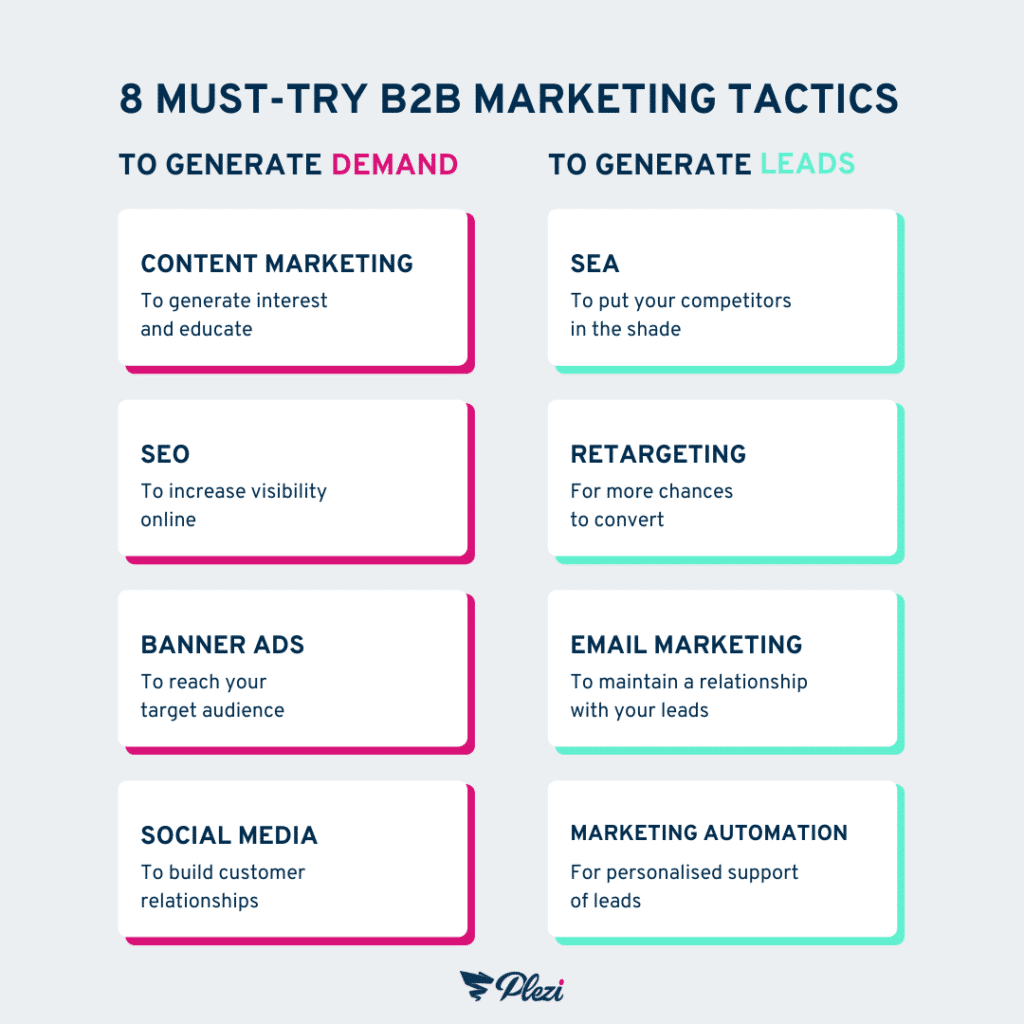
Credit: www.plezi.co
Investing In Sales And Marketing Alignment
Investing in sales and marketing alignment improves B2B marketing success. When both teams work together, they create a smoother sales process. This teamwork leads to better leads and higher revenue. Aligning sales and marketing helps companies stay focused on shared goals. It reduces misunderstandings and increases efficiency. This section explains how to build strong alignment between sales and marketing.
Creating Unified Goals
Sales and marketing must share clear and simple goals. Both teams should agree on targets like lead quantity and quality. Unified goals keep everyone focused on the same results. This prevents teams from working in different directions. Setting shared goals encourages cooperation and trust. Teams can plan together and track their progress easily.
Streamlining Communication
Regular talks between sales and marketing improve teamwork. Use simple tools like chat apps or shared documents. Clear communication avoids delays and confusion. Teams can quickly share updates and feedback. This keeps projects moving without interruptions. Easy communication builds stronger relationships and faster problem-solving.
Tracking Joint Metrics
Measure success with metrics both teams care about. Track lead conversion rates, sales cycle length, and customer feedback. Joint metrics show how well teams work together. They highlight areas to improve and celebrate wins. Sharing data creates transparency and motivates teams. Use dashboards to keep metrics visible and updated.
Adopting Marketing Automation Tools
Adopting marketing automation tools helps B2B marketers save time and improve results. These tools handle repetitive tasks and deliver personalized content. This lets marketers focus on strategy and creativity. Automation also ensures consistent communication with potential clients. It improves lead management and tracking across campaigns.
Automating Lead Nurturing
Marketing automation tools send targeted messages based on user behavior. They nurture leads through emails, social media, and other channels. Automation delivers the right message at the right time. This keeps prospects engaged and moves them closer to a sale. Automated workflows handle follow-ups without manual effort.
Scoring And Prioritizing Leads
Automation helps score leads based on their actions and data. It ranks leads by interest level and readiness to buy. Sales teams can focus on high-priority prospects first. This reduces time wasted on unqualified leads. Clear scores make lead handoff smooth and efficient.
Analyzing Campaign Effectiveness
Marketing automation tools track campaign performance in real time. They show which messages and channels work best. Marketers get detailed reports on open rates, clicks, and conversions. This data guides smart decisions to improve future campaigns. Continuous analysis boosts marketing ROI and growth.

Credit: orangeowl.marketing
Frequently Asked Questions
What Are The Top B2b Marketing Strategies For 2024?
Top B2B marketing strategies include content marketing, account-based marketing, SEO, social media, and email campaigns. Focus on personalized approaches and data-driven insights to enhance engagement and ROI in 2024.
How Does Content Marketing Benefit B2b Companies?
Content marketing builds trust and authority by providing valuable information. It attracts qualified leads, nurtures relationships, and supports SEO efforts, ultimately driving conversions and long-term business growth.
Why Is Account-based Marketing Important In B2b?
Account-based marketing targets specific high-value accounts with personalized campaigns. It improves lead quality, shortens sales cycles, and increases customer retention by aligning marketing and sales teams effectively.
How Can Social Media Boost B2b Marketing?
Social media increases brand visibility, fosters relationships, and shares thought leadership. It helps engage decision-makers, supports lead generation, and amplifies content reach in professional networks like LinkedIn.
Conclusion
Effective B2B marketing strategies build strong business connections. Focus on clear communication and understanding your audience well. Use data to guide your choices and improve results. Consistency helps build trust over time. Keep testing new ideas to see what works best.
Success comes from patience and steady effort. Stay open to learning and adapting your plans. Your business will grow with smart marketing steps. Small changes lead to big improvements. Keep your goals clear and stay focused. This approach makes B2B marketing manageable and effective.