


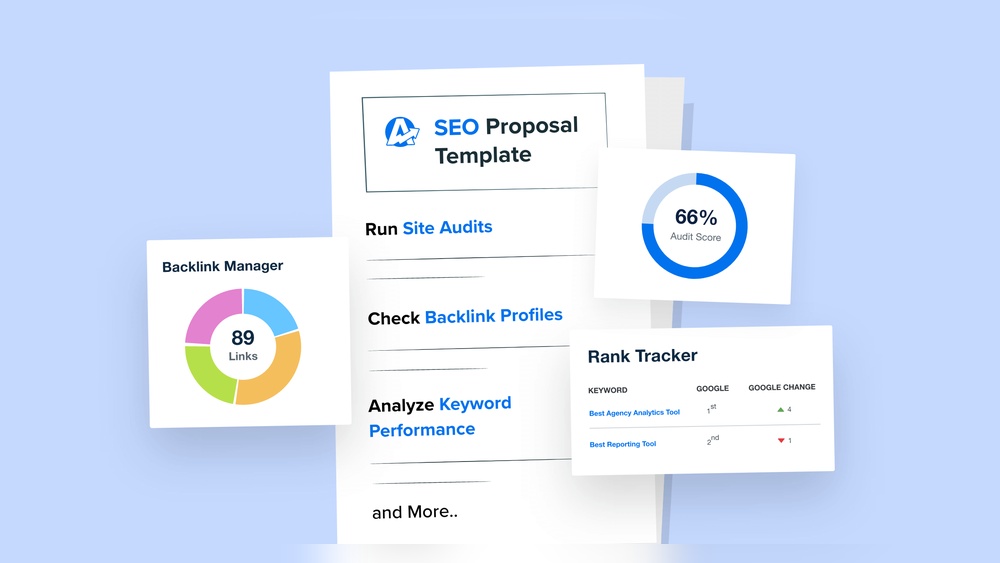
Are you struggling to get your website noticed? A strong SEO proposal might be the key to unlocking your online success.
Whether you’re a business owner or a marketer, understanding how to create or evaluate an SEO proposal can save you time and money. You’ll discover what makes an SEO proposal powerful and how it can help you rank higher, attract more visitors, and grow your business.
Keep reading—you’re about to learn the secrets that can transform your digital presence.
Importance Of Seo Proposals
SEO proposals play a key role in the success of any SEO project. They act as a clear plan that both the client and the SEO expert can follow. A well-crafted proposal helps avoid confusion and sets a strong foundation for the work ahead. It shows what the client can expect and how the SEO strategies will bring results.
Setting Client Expectations
SEO proposals help set clear expectations for clients. They detail what services will be provided and the timeline for results. This clarity helps clients understand what is realistic and what is not. It reduces misunderstandings and builds trust. Clients feel more confident knowing exactly what they will get.
Aligning Goals And Strategies
SEO proposals align the goals of the client with the strategies used. They explain how each tactic supports the client’s business objectives. This alignment ensures that efforts focus on what matters most to the client. It creates a shared vision and keeps both parties working toward the same targets.
Credit: www.seoreseller.com
Key Components Of Seo Proposals
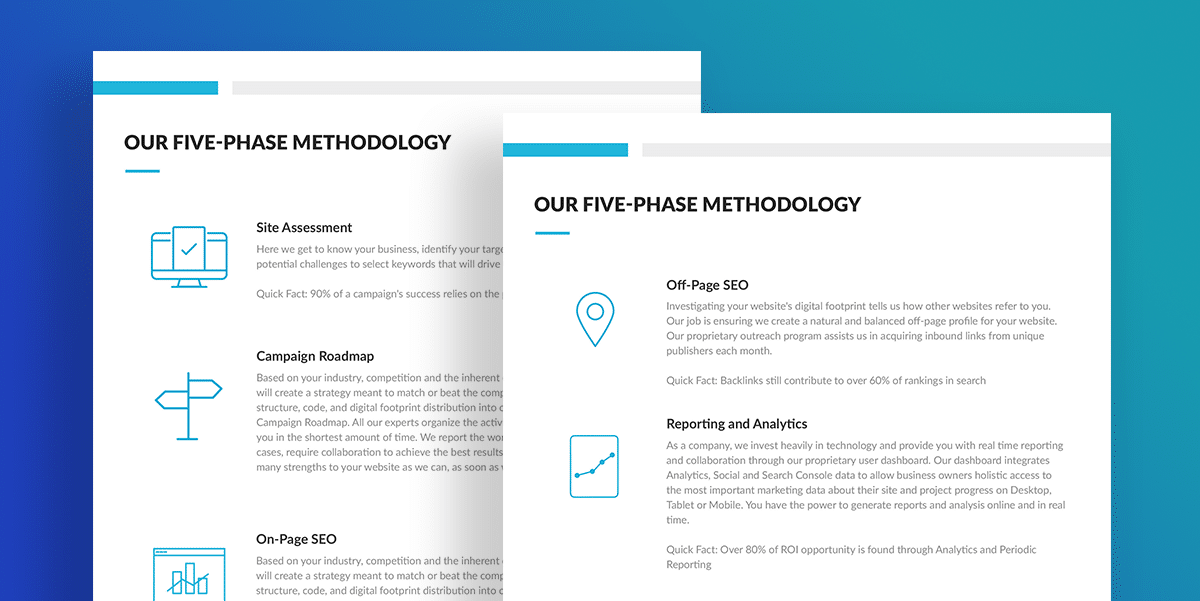
An effective SEO proposal clearly outlines the work needed to improve a website’s search rankings. It helps clients understand the steps involved and what results to expect. Each section of the proposal focuses on a key part of the SEO process.
These components work together to create a complete strategy. They include analyzing the current site, choosing the right keywords, improving the content, and fixing technical issues. Tracking progress is also essential. Below are the key parts every SEO proposal should have.
Site Audit And Analysis
This step reviews the website’s current health and performance. It checks for issues like broken links, slow pages, and poor mobile experience. The audit highlights what needs fixing to improve rankings. It also examines competitors to find opportunities.
Keyword Research And Targeting
Finding the right keywords is vital to attract visitors. This research identifies what terms potential customers use to search. It helps select keywords that balance search volume and competition. Targeting the best keywords drives relevant traffic to the site.
On-page Optimization
This focuses on improving individual pages. It includes updating titles, headings, and meta descriptions. Content is adjusted to match target keywords naturally. Internal linking and image tags are also optimized. These changes help search engines understand the page better.
Off-page Strategies
Off-page work builds the site’s reputation and authority. It involves gaining backlinks from trusted websites. Outreach, guest posting, and social media can support this effort. Strong off-page signals improve search rankings over time.
Content Development Plan
Quality content attracts and engages visitors. The plan outlines topics, formats, and publishing schedules. It ensures content matches user intent and keywords. Regular updates keep the site fresh and relevant to search engines.
Technical Seo Elements
Technical SEO fixes backend issues that affect crawling and indexing. It includes improving site speed, fixing errors, and ensuring mobile-friendliness. Proper use of sitemaps and structured data also helps. These elements make the site easier to explore for search bots.
Performance Metrics And Reporting
Tracking results shows if the SEO efforts work. Metrics like traffic, rankings, and conversions are measured. Regular reports keep clients informed about progress. Data-driven insights guide future strategy adjustments.
Tailoring Proposals To Client Needs
Tailoring SEO proposals to client needs improves project success. Each business has unique goals and challenges. Customizing proposals shows understanding and builds trust. Clear, focused plans help clients see value fast.
Effective proposals address specific client problems. They outline realistic steps and measurable results. Personalizing this document increases chances of winning the project.
Industry-specific Approaches
Every industry works differently online. SEO tactics for e-commerce differ from those for local services. Knowing the client’s market helps create relevant strategies. This knowledge targets the right audience and keywords. It also improves content and link-building plans.
Budget Considerations
Clients have different budgets for SEO work. Proposals must fit within these limits. Clear cost breakdowns avoid confusion. Suggesting scalable options helps clients choose wisely. Focus on high-impact tasks first to use budget well.
Competitor Analysis Integration
Understanding competitors guides SEO planning. Proposals should include competitor strengths and weaknesses. This insight reveals opportunities to outrank them. Sharing competitor data shows deep market knowledge. It helps create smarter, targeted SEO strategies.
Crafting Clear And Persuasive Messaging
Clear and persuasive messaging makes your SEO proposal stand out. It helps clients see the real benefits. It builds trust and shows professionalism. Writing simply and directly keeps readers interested. Avoid confusion with straightforward language and strong points.
Highlighting Value And Roi
Clients want to know what they gain. Show how your SEO work boosts their sales or traffic. Use numbers to explain expected growth. Explain savings from better search rankings. Focus on benefits like more visitors, leads, or sales. This makes your proposal more convincing and practical.
Simplifying Technical Jargon
SEO has many complex terms. Use simple words to explain these ideas. Replace “keyword density” with “how often words appear.” Describe “backlinks” as “links from other websites.” Clear language helps clients understand your plan. It also makes your message more friendly and easy.
Using Visuals And Data
Charts and graphs catch attention quickly. Show progress or results with clear visuals. Use tables to compare different strategies or costs. Visual data helps explain your points fast. It supports your words and builds trust. Clients appreciate seeing facts in a simple way.
Pricing Models And Packages
Pricing models and packages are key parts of any SEO proposal. They help clients understand costs and what services they get. Clear pricing builds trust and sets the right expectations. Different models suit different business needs and budgets. Knowing these options makes choosing easier and smarter.
Fixed Vs. Performance-based Pricing
Fixed pricing means a set fee for SEO services. Clients pay the same amount monthly or per project. This model offers stability and clear budgeting. Agencies focus on delivering the agreed work, no matter the results.
Performance-based pricing ties fees to results. Clients pay more when SEO goals are met or exceeded. This model shares risk between client and agency. It motivates agencies to work harder for better rankings and traffic.
Both models have pros and cons. Fixed pricing is simple but less flexible. Performance-based can be rewarding but may cost more. Choose based on your risk comfort and business goals.
Package Customization Options
SEO packages often come with standard services. These may include keyword research, on-page SEO, and link building. Customization lets clients add or remove services. This matches the package to their unique needs and budget.
Clients can focus on local SEO, content creation, or technical fixes. Agencies adjust the package to target the right audience. Custom options improve efficiency and satisfaction.
Tailored packages avoid paying for unnecessary services. They ensure the SEO plan fits the business perfectly. Clear communication about needs helps create the best package.

Credit: www.proposify.com
Common Mistakes To Avoid
Creating an SEO proposal is a key step in winning new clients. Avoiding common mistakes can help you build trust and show professionalism. These errors often cost time and damage your reputation. Pay close attention to the details below to improve your proposals.
Overpromising Results
Many SEO proposals promise fast or top rankings. This can set wrong expectations. SEO takes time and depends on many factors outside your control. Avoid guaranteeing specific results. Instead, focus on clear strategies and realistic goals. Honesty helps build long-term client trust.
Neglecting Client Communication
Clear communication is vital throughout the SEO process. Some proposals overlook how you will update and involve clients. Clients want to know progress and understand your actions. Plan regular reports and meetings. This keeps clients informed and engaged. Poor communication can lead to misunderstandings and lost business.
Ignoring Mobile And Local Seo
Many businesses rely on mobile users and local customers. Some SEO proposals miss targeting these groups. Mobile-friendly sites and local SEO improve visibility and traffic. Include strategies for mobile optimization and local search. This ensures your proposal meets current search trends and client needs.
Tools To Enhance Proposal Creation
Creating a strong SEO proposal takes time and effort. The right tools can make this process easier and faster. These tools help gather data, organize ideas, and present a clear plan. Using them improves your chances of winning clients.
Seo Audit Tools
SEO audit tools check websites for problems that affect search rankings. They find issues like broken links, slow pages, and bad keywords. These tools give clear reports to include in proposals. Showing clients their site’s problems builds trust and shows your expertise.
Proposal Software
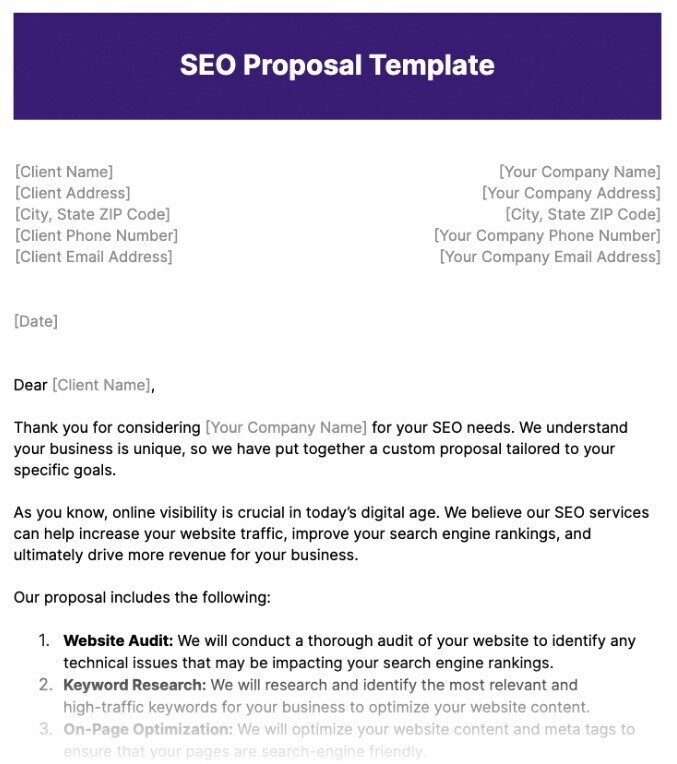
Proposal software helps create professional and neat documents quickly. It offers templates designed for SEO services. You can add charts, images, and pricing tables with ease. This software saves time and makes proposals look organized and easy to read.
Analytics Platforms
Analytics platforms track website traffic and user behavior. They provide data about visitor sources, popular pages, and conversions. Including this information in proposals proves the value of SEO work. It shows clients how you plan to improve their results.
Follow-up Strategies After Proposal Submission
Sending your SEO proposal is just the start. How you follow up can shape the entire project. Good follow-up builds trust and shows your professionalism. It keeps the conversation open and moves things forward.
Follow-up strategies help you stay top of mind. They give clients space to ask questions and clarify doubts. A well-timed follow-up can turn a maybe into a yes.
Timely Communication
Respond quickly after submitting your proposal. Don’t wait too long to reach out. A prompt message shows you care about the client’s needs. It also keeps the momentum alive. Pick a good time to follow up, usually within a few days. This helps clients review your offer while it is fresh.
Addressing Client Questions
Be ready to answer any questions clearly. Listen carefully to what the client asks. Give simple and direct answers. Avoid jargon or technical terms that confuse. Clarify benefits and processes calmly. This builds confidence and removes doubts. Make the client feel heard and supported.
Negotiation Tips
Stay flexible but firm on your key points. Understand the client’s budget and limits. Offer options or packages if possible. Focus on value, not just price. Keep a positive tone throughout talks. Be patient and open to compromise. This helps you reach a deal that works for both sides.
Credit: www.semrush.com
Frequently Asked Questions
What Is An Seo Proposal?
An SEO proposal is a document outlining strategies to improve a website’s search engine rankings. It details goals, tactics, timelines, and costs. It helps clients understand the SEO plan and expected outcomes clearly. This ensures transparency and alignment between agencies and clients.
Why Is An Seo Proposal Important?
An SEO proposal sets clear expectations and defines project scope. It helps clients evaluate the SEO service provider’s approach. It also ensures both parties agree on deliverables and timelines. This reduces misunderstandings and improves project success rates.
What Key Elements Should An Seo Proposal Include?
An SEO proposal should include an audit summary, keyword research, strategy outline, timeline, and pricing. It must also define measurable goals and reporting methods. These elements provide a comprehensive view of the SEO plan and build client trust.
How Do You Customize An Seo Proposal?
Customize an SEO proposal by researching the client’s industry, competitors, and website needs. Tailor strategies to address specific challenges and goals. Personalizing proposals shows expertise and increases the chances of winning the project.
Conclusion
A clear SEO proposal guides your online growth. It sets goals and shows how to reach them. Each step helps improve your website’s ranking. A good plan saves time and money. It also builds trust with clients or partners. Keep your proposal simple and focused.
Review it often to stay on track. Strong SEO starts with a smart proposal. Take action and watch your site improve.